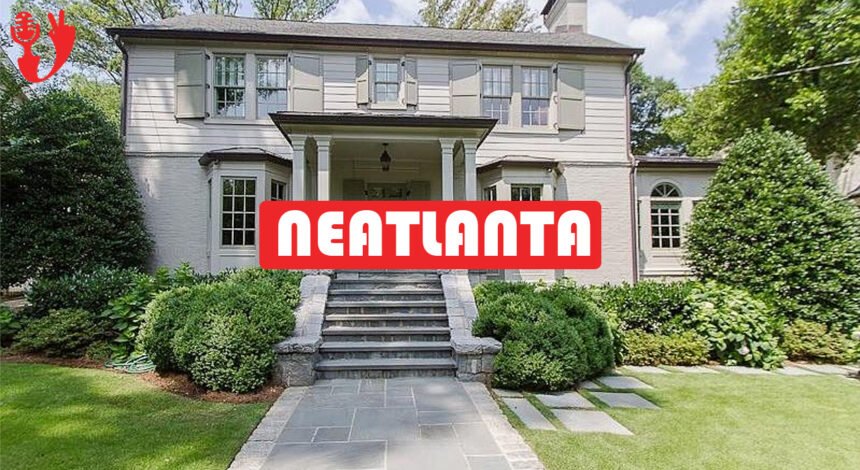
Neatlanta is an informal word that blends “neat” with “Atlanta.” It is not an official city name, a neighborhood, or a government program, and there is no single definition that everyone agrees on. Most people who use it mean a cleaner, more creative, more modern version of Atlanta, Georgia, while a smaller number of sources apply it to the northeastern side of the metro area.
That split is why beginners often come away confused. This guide explains what Neatlanta means, where the word may have come from, how it shows up in lifestyle writing and real estate, and how to judge what you read about it. A few details about the term simply cannot be confirmed, and I will say so where that is the case.
What Is Neatlanta?
Neatlanta is an unofficial, nickname-style term built from “neat” and “Atlanta.” It describes an impression more than a location. When writers use it, they are usually pointing to an Atlanta that feels tidy, walkable, creative, and forward-looking, as opposed to the traffic and sprawl the region is also known for.
Because the word is informal, you will not find it on a map, in a city directory, or on a street sign. No governing body stands behind it, and no formal definition is followed by everyone who uses it. It works more like a hashtag or a piece of slang: it means roughly what the speaker intends, and context is the only dependable guide.
Neatlanta Is Not an Official Place
Atlanta has a long list of named neighborhoods, from Buckhead to Cabbagetown, and each has its own boundaries and history. Neatlanta is not one of them. It is not a city, a neighborhood, or a ZIP code that I could find any record of, and it should not be treated as a destination you can navigate to.
That matters for practical reasons. If you type the word into a mapping app expecting a pin, you will probably land on something unrelated. The names that actually point to places are the neighborhoods, districts, and cities that make up the metro area.
Where the Word Comes From
The honest answer is that the origin is unclear. The word looks like casual online wordplay, the kind of blend people coin when they want a catchy way to describe a city’s mood. Several websites that discuss the term guess that it started with bloggers and social media users and spread from there.
That explanation is plausible, but it is a guess. I could not find a documented creator, a first date of use, or a platform where the term clearly began. Anyone who tells you exactly who coined it, or exactly when, is presenting speculation as fact.
Why the Meaning of Neatlanta Varies
Since nobody owns the word, different writers have attached it to different ideas. Three uses come up most often, and telling them apart is the quickest way to make sense of any page that mentions Neatlanta.
The Lifestyle and Identity Meaning
This is the most common use. In lifestyle and culture writing, Neatlanta stands for a modern, creative, and orderly image of Atlanta. Pages that use it this way tend to mention areas such as Midtown, Old Fourth Ward, Virginia-Highland, West End, and Sweet Auburn, along with the BeltLine, as examples of the city’s newer or more polished side.
In this sense the term is a mood rather than a definition. Two people can use it and mean slightly different things, and neither would be wrong, because there is no rulebook to be wrong about.
The Northeast Atlanta Real Estate Meaning
A smaller group of pages uses Neatlanta as shorthand for northeast Atlanta neighborhoods and housing. Northeast Atlanta is itself an informal region rather than an official one. Local listing and deal sites commonly describe it as covering areas such as Buckhead, Brookhaven, Druid Hills, and parts of Decatur, although the exact boundaries change from source to source.
This reading is not universal. Other pages that discuss the term explicitly reject the idea that it means Northeast Atlanta. If you are researching housing, that disagreement is a good reason to set the word aside and search by real neighborhood names instead.
Simple Wordplay
Some people use the word purely as a pun or a tag, with no deeper meaning. A photographer might attach it to a caption about a clean skyline shot, or a local business might adopt it as a playful name. In those cases the word is doing a humor or branding job, not describing a place or a movement.
The table below sums up the three uses.
| Usage | What it usually means | Where you are likely to see it |
|---|---|---|
| Lifestyle and identity | A cleaner, more creative, more modern image of Atlanta | Culture blogs and magazine-style articles |
| Real estate shorthand | Neighborhoods in the northeastern part of the metro area | Housing and neighborhood guides |
| Wordplay | A pun or catchy label with no fixed meaning | Social posts, captions, and casual branding |
The Atlanta Context Behind the Term
To understand why the word has any appeal, it helps to look at what is happening in Atlanta itself. The word “neat” is doing real work in these descriptions, because several visible changes in the city lend themselves to that kind of language.
The BeltLine and Reused Spaces
The Atlanta BeltLine is a redevelopment effort built around a loop of former railroad corridors that circle the center of the city. The idea is widely credited to Ryan Gravel, who proposed it in a 1999 graduate thesis at Georgia Tech. Over the years, sections of the corridor have been turned into trails and parks, with shops, restaurants, and housing growing up nearby.
Ponce City Market in Old Fourth Ward is often mentioned alongside it. The complex occupies a former Sears building, which makes it a popular example of how Atlanta has reused older industrial and commercial space. When writers talk about a neater Atlanta, this kind of conversion, where something worn out becomes something clean and walkable, is often what they have in mind.
Neighborhoods That Often Come Up
A handful of neighborhoods appear again and again in pieces that use the term. Each has a different character, which is a reminder of how much ground the label tries to cover.
- Midtown: home to Georgia Tech and to major arts institutions such as the High Museum of Art.
- Old Fourth Ward: known for Ponce City Market and access to the BeltLine’s Eastside Trail.
- Virginia-Highland: a walkable area with local shops and restaurants and many historic bungalow-style homes.
- West End: one of the city’s older residential neighborhoods, with a long history.
- Sweet Auburn: a historic Black business and cultural district along Auburn Avenue, the neighborhood where Martin Luther King Jr. was born and home to a national historical park dedicated to his life.
These places are quite different from one another, so using a single word to describe all of them is a stretch. That is an interpretation, not a fact about the neighborhoods, and it is worth keeping in mind whenever a page treats Neatlanta as if it were a settled category.
Culture and the Creative Scene
Atlanta is widely recognized for its influence on hip-hop and for a busy film and television production scene. It is also nicknamed the “City in a Forest” because of its tree cover, and it hosted the 1996 Summer Olympics. These details shape how people describe the city, and they help explain why a modern, creative image of Atlanta resonates with writers even though the term itself has no formal backing.
What Neatlanta Is Not
A few misunderstandings are common enough to address directly.
It is not an official city campaign. I found no evidence that the City of Atlanta or any government body created or promotes the term.
It is not a recognized real estate designation. Listing sites organize homes by actual neighborhoods, cities, and counties. Searching by the word Neatlanta will not reliably surface anything useful.
It is not a documented historical term. Unlike nicknames that have appeared in print for decades, this one has no verifiable history that I could trace.
It is not necessarily a business. I did not find a single company, organization, or program that owns the name. If you see it used as a brand, treat that as the business’s own choice and check the business directly. Similarly spelled names also belong to unrelated companies, so double-check spelling and context before assuming two things are connected.
How to Use the Term Responsibly
How you handle the word depends on why you are reading about it.
If You Are a Reader or Visitor
Treat Neatlanta as a flavor word, not a planning tool. If you are visiting Atlanta, use official neighborhood names, local tourism resources, and current maps. A neighborhood such as Old Fourth Ward or Midtown gives you something concrete to look up, with real addresses, hours, and transit options, while the nickname gives you only an atmosphere.
It also helps to check how you will get around. MARTA, the region’s transit system, serves parts of the metro area but does not reach everywhere, so match routes to your exact destinations.
If You Are Researching a Move or Home Purchase
Here the stakes for accuracy are higher. Search by neighborhood, city, and county rather than by a nickname. The Atlanta metro area spans many jurisdictions, and some addresses with an Atlanta mailing address fall in other cities or counties. Taxes, school assignments, and commute times depend on the exact address, and nothing about the word Neatlanta tells you any of that.
Verify details with official sources, a local agent, and the relevant school district and county before making decisions.
If You Are a Writer or Marketer
If you write about the term, define it the first time you use it, call it informal, and avoid presenting it as an official name. Do not invent an origin story. If you want to describe Atlanta’s growth, redevelopment, or sustainability efforts, cite real sources such as city documents, local reporting, or published research, and skip broad claims you cannot support. Readers can usually tell when a page is stretching to sound more certain than it is.
How to Judge Online Claims About Neatlanta
Because the term is loosely defined, much of what has been written about it is interpretation delivered with confidence. A few quick checks help separate useful writing from filler.
- Look for named sources. A claim about Atlanta’s growth, housing costs, or sustainability should point to a report, a government source, or reputable local reporting.
- Check the date. Neighborhoods change, and an article without a date is hard to trust on current conditions.
- Watch for precise numbers with no source. Percentages and rankings that appear out of nowhere are a warning sign.
- Notice whether the page admits uncertainty. A page that says the origin is unclear is more believable than one that offers a confident backstory.
- Compare definitions. If one page says the term means a neighborhood and another says it is a mindset, neither can be treated as the official answer.
The pattern is worth stating plainly: the less established a term is, the more carefully its explanations should be read.
How Neatlanta Compares With Older Atlanta Nicknames
Atlanta already has well-known nicknames. “ATL” comes from the airport’s three-letter code and is widely used by locals and in music and merchandise. “Hotlanta” has been a playful shorthand for many years. “City in a Forest” points to the tree canopy. Each has a clear logic and a long record of use.
Neatlanta appears to be newer and much thinner in documentation. In the sources I could find, it lacks a known origin, a stable meaning, and a clear footprint in everyday local speech. That does not make it meaningless, since people can coin and share words quickly. It does mean the term should be described for what it is: an informal label that different people fill with different ideas, not a settled name in Atlanta’s vocabulary.
Conclusion
Neatlanta is best understood as an informal word, not a place. It blends “neat” and “Atlanta,” and it most often stands for a cleaner, more creative, more modern image of the city, drawing on real features such as the BeltLine, reused buildings like Ponce City Market, and a lively set of neighborhoods. A smaller number of sources use it as shorthand for northeast Atlanta, and others simply treat it as wordplay.
The practical takeaway is simple. When you run into the term, check the context to see which meaning the writer intends. For anything that involves travel, housing, or money, rely on real neighborhood names and official sources, and be skeptical of confident claims about where the word came from or what it officially means. Neatlanta can be a handy way to talk about a mood, as long as nobody mistakes it for a map.
Frequently Asked Questions
What does Neatlanta mean?
Neatlanta is an informal blend of “neat” and “Atlanta.” It most often describes a cleaner, more creative, more modern image of Atlanta, Georgia, though the meaning varies from writer to writer.
Is Neatlanta a real place?
No. It is not an official city, neighborhood, or district. The real places people associate with it are Atlanta neighborhoods such as Midtown, Old Fourth Ward, and Virginia-Highland.
Is Neatlanta the same as Northeast Atlanta?
Not necessarily. A few sources use it that way, while others reject the idea. Northeast Atlanta is also an informal region, so check the specific neighborhood you care about.
Who created the term Neatlanta?
That is unknown. I could not find a documented creator or first use. It looks like online wordplay, but that is speculation, not a confirmed fact.
Is Neatlanta an official Atlanta campaign or brand?
I found no evidence that the City of Atlanta or any official body created or promotes it. If a business uses the name, treat it as that business’s own brand.
Why do people use the word Neatlanta?
It is a quick label for an image of Atlanta as polished, creative, and walkable, often tied to the BeltLine and reused buildings. Others use it purely as a pun or a tag.
How can I find reliable information about Atlanta neighborhoods?
Use the City of Atlanta’s official website, neighborhood associations, local news outlets, and county records. Search by real neighborhood names rather than nicknames.