
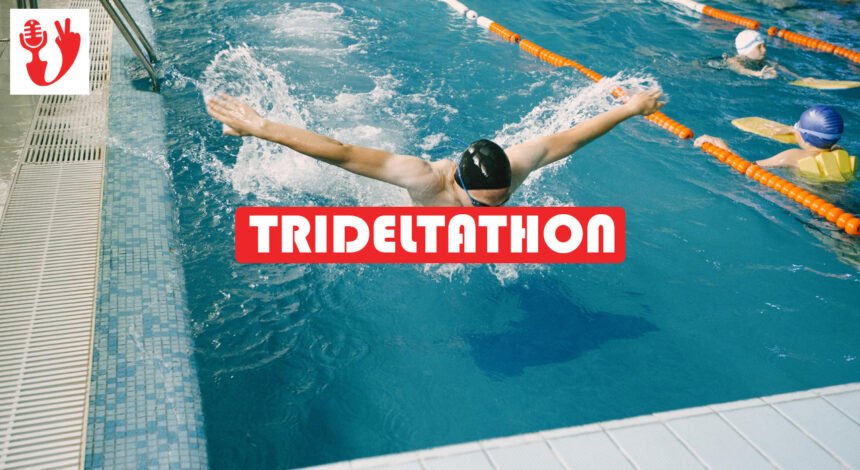
TriDeltathon is a pool triathlon in Knoxville, Tennessee, and the money it raises goes to a children’s hospital. Race listings name East Tennessee Children’s Hospital as the event’s chosen charity, so a registration fee here doubles as a donation to a local cause.
That is the short version. The rest of this article covers how the race works, how it supports the hospital, who organizes it, and what is worth checking before you sign up or give. It also flags what the public record does not say, because a few details are easy to assume and hard to confirm.
What Is TriDeltathon?
TriDeltathon is a sprint-style triathlon held on the University of Tennessee campus in Knoxville. Athletes swim 400 meters in a pool, bike 6 miles around campus and along Neyland Drive, and finish with a 3 mile run. The organizers describe it as the oldest running pool triathlon in the country, and a Knoxville running store once wrote about an edition as the race’s 31st year.
The name combines “Tri Delta” and “triathlon,” and the connection is real. Race listings say volunteer support comes from members of Delta Delta Delta sorority, and those same listings say proceeds go to East Tennessee Children’s Hospital. The event is listed under Race Day Events, a company that also puts on other pool and campus triathlons around East Tennessee.
The Course at a Glance
| Leg | Distance | Route notes |
|---|---|---|
| Swim | 400 meters | Pool at the UT Student Aquatic Center, swimmers start one at a time |
| Bike | 6 miles | Campus loops plus a stretch along Neyland Drive |
| Run | 3 miles | Campus route passing Neyland Stadium and Thompson-Boling Arena |
The swim works as a time trial. Older course descriptions explain that swimmers start one at a time, about five seconds apart, with the fastest swimmers going first. They then travel up one lane, down the next, and so on until they reach 400 meters. That format cuts down on the crowding you see in mass-start swims, which is one reason pool triathlons attract first-timers. For a sense of pace, a Fleet Feet Knoxville recap reported an overall winner finishing in 40:56 in one year.
How Does TriDeltathon Benefit East Tennessee Children’s Hospital?
TriDeltathon names East Tennessee Children’s Hospital as its chosen charity, and the race listing states that proceeds go to the hospital. Entry fees and related fundraising support a pediatric hospital in Knoxville, the same city where the race takes place.
The relationship appears to be long-standing. A listing for a companion 5K, put on by the same sorority and Race Day Events, said its proceeds would follow the path the triathlon’s money had taken for years. That path led to the hospital and to Camp Eagles Nest, a summer camp for children with cancer and rare blood disorders.
That detail matters. It suggests the giving is a habit built around the race rather than a one-year promotion. It also hints at the kind of work the money may touch, though the TriDeltathon pages themselves do not say which programs receive funds in a given year.
What the 2020 Cancellation Showed
In 2020, the race was canceled after the University of Tennessee moved to online instruction for the rest of the academic year. Organizers offered registrants several choices: transfer to the 2021 race, move to another Race Day Events sprint triathlon, convert the fee into credit toward a longer race, or take a refund. One option let people leave their entry fee with the organizers so the race could still benefit East Tennessee Children’s Hospital.
This is a useful window into how the fundraising is built. The charity is part of the registration conversation, not an afterthought. Participants were invited to give even when there was no race to run.
What the Public Race Pages Do Not Say
The race pages reviewed for this article do not publish a dollar total raised, and they do not break down how the hospital uses the gift. That is not unusual for community races, but it is worth knowing. If you need figures for a news story, a sponsorship pitch, or your own giving decisions, ask the organizers or the hospital directly rather than relying on estimates floating around online.
About East Tennessee Children’s Hospital
East Tennessee Children’s Hospital is a pediatric hospital based in Knoxville that serves children in the region. For readers outside the area, that local anchor is the point. Money raised at a Knoxville campus race stays tied to a Knoxville institution, which is different from a national campaign where gifts are pooled across the country.
Because the race pages do not specify which departments or programs receive funds, it is wise to avoid claims about exactly what a donation buys. The accurate statement is that the race supports the hospital and, according to a companion event’s listing, Camp Eagles Nest.
Who Organizes TriDeltathon?
Three groups come up in the listings.
- Delta Delta Delta volunteers: Race pages say volunteer support is provided by the women of the sorority, with proceeds directed to the hospital.
- Race Day Events: The race management company that lists the event, fields participant questions, and runs other sprint triathlons in the region.
- The University of Tennessee: The campus supplies the setting, from the Student Aquatic Center for the swim to a course that passes Neyland Stadium and Thompson-Boling Arena.
Local Event, National Sorority
Delta Delta Delta, widely known as Tri Delta, is a national sorority founded at Boston University in 1888, as described in its Wikipedia entry. Its national philanthropic partner is St. Jude Children’s Research Hospital, a relationship St. Jude says began in 1999.
This is where readers often get confused. The national organization’s headline cause is St. Jude, but TriDeltathon is a local event whose listed beneficiary is East Tennessee Children’s Hospital. Both are children’s health causes, yet they are different channels. If you want your entry fee to support the Knoxville hospital, TriDeltathon is the right event. A gift to St. Jude is a separate decision.
Why a Pool Triathlon Works as a Fundraiser
Triathlon, in its general form, combines swimming, cycling, and running in a single event, as the triathlon overview on Wikipedia explains. Open-water races can scare off beginners, though. Cold water, waves, and crowded starts keep plenty of people on the sidelines.
A pool-based format lowers that barrier. The swim happens in marked lanes, the course is short, and relay teams let friends split the work. The 2020 listing opened the individual race to ages 10 and up and the relay to ages 7 and up, which makes room for families and student groups. TriDeltathon’s distances are also shorter than a typical sprint race, which keeps training demands modest.
Lower barriers help fundraising for a simple reason: more entrants means more registration fees and more people with a personal stake in the cause. A race that feels doable, and that is tied to a children’s hospital, gives participants a reason to bring friends, teammates, and family.
If building toward a first race is your goal, the Health section on EU Press is a place to browse for general reading on staying active.
What to Know Before Race Day
Details change from year to year, so treat this as a planning guide and confirm everything on the current registration page.
- Date: Past editions were held on Sundays in mid-April, based on earlier listings.
- Start time: The listing shows an 8:30 a.m. start.
- Packet pickup: Packets could be picked up starting at 6:30 a.m. on race morning at the UT Student Aquatic Center, and race-day registration was available then.
- Divisions: Individual and relay.
- Size: About 350 participants were expected in the listing reviewed.
- Sanctioning: The race is not USAT sanctioned, so it runs outside USA Triathlon’s sanctioning program. Check the registration page for any waiver or membership requirements.
- Cost: A 2013 listing showed early individual entry at $40 and relay at $60, with student discounts. Those numbers are old, so rely on the current page.
How the Day Flows
The format is simple. You arrive early, collect your packet, and set up your gear. You swim in your assigned order, move to the bike, ride the campus route, and then head out on the run. Because swimmers start one at a time, your finish time is measured from your own start rather than from a shared gun.
Practical Tips for First-Timers
Course notes from earlier years described the run as fairly hilly, with water stops at miles one and two, so some hill work in training will pay off. Practice swimming in a lane with other people, since sharing a lane and handling turns is a different skill from solo laps. Try at least one bike-to-run workout so your legs know what to expect in the final stretch. And make sure you know your swim start time, which is based on estimated swim speed in the time-trial format.
Ways to Support the Cause Without Racing
You do not have to swim a lap to help.
- Volunteer: Race pages note volunteer support from the sorority. Ask the organizers whether extra hands are needed.
- Form a relay team: It brings coworkers, classmates, or family into the event at a lower training load.
- Give directly: Contact East Tennessee Children’s Hospital about its donation options if you would rather give outside the race.
- Spread the word: A fuller field means more registration fees going toward the cause.
For more community-minded reading, the Lifestyle section on EU Press covers everyday topics beyond the race itself.
How to Confirm Where the Money Goes
Anyone giving to a charity race can do a little homework, and doing so is the mark of a thoughtful donor, not a skeptic. Start with the race page and see which charity it names. Then ask the organizers whether a total is reported each year and how the donation reaches the hospital. If you plan to write about the event, ask the hospital for a statement rather than inferring one.
These steps take a few minutes, and they keep every claim you repeat grounded in something verifiable.
Conclusion
TriDeltathon is more than a spring race on a college campus. It is a long-running pool triathlon in Knoxville whose listed beneficiary is East Tennessee Children’s Hospital, supported by Delta Delta Delta volunteers and listed through Race Day Events. The format is approachable, with a 400 meter pool swim, a 6 mile bike, and a 3 mile run, and the relay option and age range invite families and student groups.
The main takeaway is straightforward. If you want to support a Knoxville children’s hospital while taking on a manageable athletic challenge, this event is built for that. Confirm the current date, prices, and rules on the official race page, and ask the organizers or the hospital if you need numbers on what has been raised.
FAQs
What is TriDeltathon?
It is a pool-based sprint triathlon in Knoxville, Tennessee, with a 400 meter swim, a 6 mile bike, and a 3 mile run. Organizers call it the oldest running pool triathlon in the country.
Who benefits from TriDeltathon?
East Tennessee Children’s Hospital is the chosen charity named on the race listings. A companion 5K listing also mentions Camp Eagles Nest.
Where is TriDeltathon held?
The event is based at the Student Aquatic Center on the University of Tennessee campus in Knoxville. The bike and run routes use campus roads and Neyland Drive.
How long are the swim, bike, and run?
The swim is 400 meters, the bike is 6 miles, and the run is 3 miles.
Can kids and beginners enter?
The 2020 listing opened the individual race to ages 10 and up and the relay to ages 7 and up. The short distances suit beginners, but confirm age limits on the current page.
Is TriDeltathon USAT sanctioned?
No. The race listing states that it is not a USAT sanctioned event.
When is TriDeltathon held?
Past editions were on Sundays in mid-April, including April 14, 2013, and April 13, 2014. Check the current race page for this year’s date.