
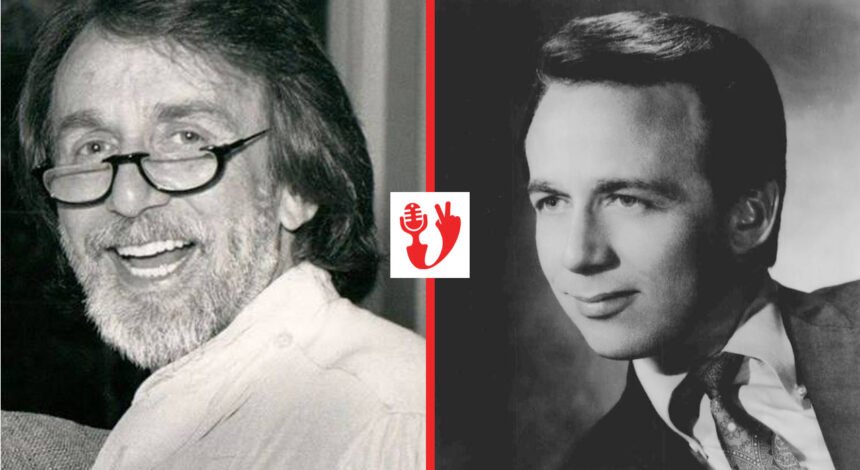
Tammy Wynette spouse George Richey was the fifth and final husband of the country music star, and he stayed married to her from 6 July 1978 until her death in April 1998. A Nashville songwriter, session pianist and record producer, Richey also worked as her full-time manager, so he shaped both her career and her private life for two decades. This article explains who he was, how he built his career, what happened inside the marriage and why his name still divides fans, family members and critics today.
If you have watched the 2022 miniseries George & Tammy and wondered how much of the story is true, or if you simply want a clear, fact-based profile, the sections below cover everything you need.
George Richey Bio Table
| Detail | Information |
|---|---|
| Birth name | George Baker Richardson |
| Professional name | George Richey |
| Date of birth | 30 November 1935 |
| Birthplace | Promise Land, Arkansas, United States |
| Raised in | Malden, Missouri |
| Date of death | 31 July 2010 |
| Place of death | Nashville, Tennessee |
| Age at death | 74 |
| Cause of death | Complications of chronic obstructive pulmonary disease (COPD) |
| Occupations | Songwriter, record producer, session pianist, musical director, manager |
| Best known for | Being Tammy Wynette’s fifth husband, manager and producer |
| Television work | Musical director of Hee Haw (1970 to 1977) |
| Famous co-writes | “Keep Me in Mind” (Lynn Anderson), “’Til I Can Make It on My Own” (Tammy Wynette), “The Grand Tour” (George Jones) |
| Marriage to Tammy Wynette | 6 July 1978 until her death in 1998 |
| Other marriages | Dorothy Ann Tippit (1953 to 1969), Sheila Hall (1974 to 1977), Sheila Slaughter (2001 until his death) |
| Children | Three, including Kelly, Diedre and Tatum Keys |
| Sibling | Paul Richey, a fellow songwriter |
| Portrayed by | Steve Zahn in George & Tammy (2022) |
| Resting place | Nashville, near Tammy Wynette |
Who Was Tammy Wynette’s Spouse?
Tammy Wynette’s final spouse was George Richey, who married her on 6 July 1978. He was her fifth husband and remained with her until she died on 6 April 1998 at the age of 55.
Wynette’s marital history was famously turbulent, and it often fed into her songwriting. Her five marriages ran as follows:
- Euple Byrd: married in 1960 and divorced in 1965. They had three daughters together.
- Don Chapel: married in 1967, separated within a year and later had the marriage annulled.
- George Jones: married on 16 February 1969 in Ringgold, Georgia. They divorced in 1975 and had one daughter, Georgette.
- Michael Tomlin: married on 18 July 1976, only weeks after they met. The marriage was annulled about six weeks later.
- George Richey: married on 6 July 1978 and stayed together until her death in 1998.
Her marriage to Richey therefore lasted nearly twenty years, far longer than any of the others. That detail alone explains why people searching for her spouse almost always land on his name.
George Richey’s Early Life and Background
George Richey entered the world as George Baker Richardson on 30 November 1935 in Promise Land, Arkansas. He grew up in Malden, Missouri, a small town in the state’s Bootheel region. His brother, Paul Richey, also wrote songs, which suggests that music ran strongly through the family.
He became known professionally as George Richey, and he built his working life in Nashville. Through the 1960s he worked as a session pianist, one of the studio players who gave country records their polished sound, and he moved on to songwriting and producing.
His first marriage came early. In 1953 he married Dorothy Ann Tippit, and the couple had two children, Kelly and Diedre. They divorced in 1969.
George Richey’s Music Career
Richey built a respectable career long before the world connected him with Wynette. He worked in three main areas, and each one deserves a closer look.
Session Pianist
As a session musician, Richey played on recordings for artists including Marty Robbins, Lefty Frizzell and Ringo Starr. Session players rarely received public credit in those days, yet producers relied on them for speed, skill and consistency. Richey’s piano work placed him inside the Nashville studio system at a time when it was producing some of the best-selling country music ever made.
Musical Director of Hee Haw
From 1970 to 1977, Richey served as musical director of Hee Haw, the long-running country variety show. The programme combined comedy sketches with performances from leading country artists, so the job put him in close contact with stars and record executives. It also gave him steady television credentials and a wide network of industry contacts.
Songwriter and Producer
Songwriting brought Richey his best-known successes outside the Wynette marriage. He co-wrote “Keep Me in Mind,” which reached number one on the country chart for Lynn Anderson in 1973. He also contributed to songs recorded by George Jones, including “A Picture of Me (Without You)” and “The Grand Tour.” As a producer, he oversaw sessions that shaped the sound of several country records, and he later produced much of Wynette’s own material.
How George Richey Met Tammy Wynette
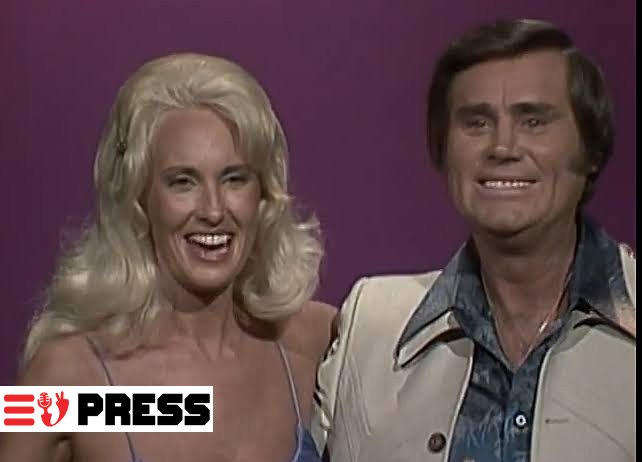
Richey and Wynette knew each other professionally before they married. He worked with her as a songwriter, publisher and producer, so their relationship began in the studio rather than at a social event. That timeline matters, because it shows how closely her working life and her love life overlapped.
By the mid-1970s, Wynette’s marriage to George Jones had ended, and her short marriage to Michael Tomlin had collapsed within weeks. Richey was a steady presence in her professional circle during that period. Around the same time, his own second marriage, to Sheila Hall, was ending. Hall filed for divorce in 1977 on grounds of cruel and inhuman treatment, withdrew the petition, then filed again in October 1977 after learning of an affair with Wynette.
Richey and Wynette married on 6 July 1978. Wynette was one of the most famous women in country music by then, with a catalogue that included “Stand by Your Man,” “D-I-V-O-R-C-E” and “I Don’t Wanna Play House.”
The Songs Richey Wrote for Tammy Wynette
Richey’s creative partnership with Wynette produced some of her later signature material. He co-wrote “’Til I Can Make It on My Own,” a 1976 song about rebuilding a life after heartbreak, as well as “You and Me.” The first of these in particular remains one of her most admired recordings, and critics often point to it as proof that her later work could match the earlier hits.
What is clear is that he held several roles at once, as co-writer, producer and manager, and that this combination gave him unusual influence over what she recorded and how it reached the public.
Life Inside the Marriage
After the wedding, Richey became Wynette’s full-time manager and took control of her finances. He managed her business affairs and worked as her producer and songwriter, which meant that almost every professional decision passed through him.
Supporters of Richey argue that he gave a chaotic life some structure. Wynette herself told the press that she loved him, and she remained married to him for the rest of her life, which made this the longest of her five marriages.
Critics describe a far darker picture. Her daughters and several people close to the singer described the marriage in negative terms, and the claims are worth stating carefully:
- Jackie Daly, one of Wynette’s daughters, said Richey helped enable her mother’s drug addiction.
- Georgette Jones, Wynette’s youngest daughter, called the marriage emotionally abusive and alleged that Richey kept Wynette away from her children and friends.
- Reports also say that he dismissed several female members of her road crew after the wedding.
- Some family members and friends said Wynette later regretted the marriage, even though she spoke warmly of Richey in public.
These are allegations and recollections from family members, not established findings. Readers should treat them as one side of a contested story.
Tammy Wynette’s Health Problems
To understand the final years of the marriage, it helps to understand how seriously ill Wynette was. A hysterectomy in 1970 led to infection, scar tissue and lifelong gallbladder problems. Over time, the pain medication prescribed for these conditions became a long-term addiction, and she used drugs such as Valium, Demerol and Dilaudid.
Her health crises kept returning:
- 1986: she entered the Betty Ford Center, then needed eight hours of surgery for an intestinal blockage after only three weeks.
- 1993: a bile duct infection left her in a coma for several days before she recovered.
- Later years: she also had vocal cord surgery, kidney surgery and a permanent catheter used for injections and feeding.
Richey managed her care and her career through all of this, which is exactly why his decisions attract so much scrutiny.
The Death of Tammy Wynette
Tammy Wynette died on 6 April 1998 at her home in Nashville. The day before, on 5 April, she had felt a burning sensation in her leg. Richey phoned her doctor, Wallis Marsh, who was in Pittsburgh, about 500 miles away. Marsh urged him to take her to an emergency room, but Richey did not. He later said that she did not want to go to hospital.
Marsh certified the death and listed a blood clot in the lung as the cause in his original report. A public memorial at the Ryman Auditorium on 9 April drew about 1,500 mourners, after a private graveside service and entombment at Woodlawn Memorial Park.
The Exhumation and the Lawsuit
The story did not end with the funeral. In April 1999, Wynette’s daughters Tina, Jackie and Georgette filed a wrongful death lawsuit worth $50 million. They named Marsh, Care Solutions Inc., a local company that delivered prescriptions to her home, and Richey. The suit followed a local reporter’s discovery that the sedative midazolam had been shipped to the singer.
The daughters claimed that Richey had ignored medical advice. Marsh said that he had told Richey to take Wynette to hospital. Her body was exhumed in 1999 so that doctors could carry out an autopsy, and the medical examiner reached a different conclusion from the original report, pointing to cardiac arrhythmia rather than a lung clot.
The legal outcome was mixed:
- Richey was later dropped as a defendant.
- The court dismissed the claims against Care Solutions.
- The remaining parties reached a confidential settlement with Marsh.
- Wynette’s remains were reinterred in the Woodlawn Cross Mausoleum.
In 2012, the name on her tomb changed to “Virginia W. Richardson,” her legal married name, which angered her daughters.
George Richey’s Later Life and Death
After Wynette’s death, Richey withdrew largely from public life. In 2001, he married Sheila Slaughter, a former Dallas Cowboys cheerleader and television producer. They had a daughter, Tatum Keys, and they stayed married until his death.
Richey died on 31 July 2010 in Nashville at the age of 74. He had suffered for years from chronic obstructive pulmonary disease and had smoked for a long time. His family kept the news private for more than three weeks. He asked for no public memorial, and he was buried in Nashville near Wynette.
George Richey in George & Tammy
The 2022 miniseries George & Tammy brought Richey back into public conversation. Steve Zahn played him alongside Jessica Chastain as Wynette and Michael Shannon as George Jones. The series focused mainly on the turbulent love story between Wynette and Jones, but it also revisited the later years and the shadow that Richey cast over them.
Viewers curious about other celebrity partnerships can read about Kathleen McCrone, the wife of Wayne Newton, or explore the family story behind Elliot Kingsley, the adopted son of Ozzy Osbourne.
Why the Question “Who Was Tammy Wynette’s Spouse?” Still Matters
Searches for the Tammy Wynette spouse remain strong for a few reasons. Wynette’s life contained enough drama for several biographies, and each of her five marriages shaped her music. Richey sits at the centre of the final chapter, which includes her last recordings, her death and the legal fight that followed.
His legacy is complicated. On one side, he was a skilled musician, a successful co-writer and a producer who stood beside Wynette for twenty years. On the other, family members accused him of controlling her life and failing her at a critical moment, though he was later dropped from the lawsuit. Fair readers will weigh both sides and avoid easy conclusions.
For deeper background, the George Richey and Tammy Wynette entries on Wikipedia offer detailed timelines.
Conclusion
George Richey was Tammy Wynette’s fifth and final husband, a Nashville pianist, songwriter, producer and manager who married her in 1978 and stayed with her until she died in 1998. His career included session work, seven years as musical director of Hee Haw, a number one hit for Lynn Anderson and several songs for Wynette and George Jones. His marriage, however, remains the subject of sharp disagreement, with her daughters describing control and neglect while Richey and Wynette herself spoke of love and loyalty. He died in Nashville in 2010 at the age of 74, and his place in country music history will always be tied to the woman he married.
Frequently Asked Questions
Who was Tammy Wynette’s last husband?
Tammy Wynette’s last husband was George Richey, a songwriter, producer and manager from Nashville. They married on 6 July 1978 and stayed together until her death on 6 April 1998. He was her fifth husband.
How many times was Tammy Wynette married?
Tammy Wynette married five times. Her husbands were Euple Byrd, Don Chapel, George Jones, Michael Tomlin and George Richey. The marriage to Richey was the longest, lasting almost twenty years.
How did George Richey die?
George Richey died on 31 July 2010 in Nashville, Tennessee, at the age of 74. He had battled chronic obstructive pulmonary disease for years and had been a long-time smoker. His family kept the news private for more than three weeks.
What songs did George Richey write?
George Richey co-wrote “Keep Me in Mind,” a number one country hit for Lynn Anderson in 1973. He also co-wrote “’Til I Can Make It on My Own” and “You and Me” for Tammy Wynette. For George Jones, he helped write “A Picture of Me (Without You)” and “The Grand Tour.”
Was George Richey sued over Tammy Wynette’s death?
Yes, Wynette’s daughters filed a $50 million wrongful death lawsuit in April 1999 against her doctor, a prescription delivery company and Richey. They claimed he had ignored medical advice to take her to hospital. Richey was later dropped as a defendant.